
Ask a room of GTA Tesla owners what surprised them most in their first year, and tire wear is near the top of the list. The car is quiet, quick and cheap to run — and then the first tread-depth check comes back lower than anyone expected. Put a soft winter set on that same car and the question gets sharper: is winter rubber going to disappear even faster? This week is when it stops being theoretical. Toronto is wet today with a high near 11°C, Thursday night drops to about −1°C with a chance of rain showers or flurries, and Friday stays near 5°C. Winter tires are going on across the GTA right now — so here is why an EV works a winter tire harder than a gas car does, and the handful of habits that slow the wear down.
The short version: it is not one thing. It is three things stacked — instant torque, battery weight, and a winter compound that is soft by design. None of them is a reason to skip winter tires. All three are reasons to choose the right set, keep it at the right pressure, and rotate it on schedule instead of treating an EV like a gas car with a quieter engine.
Instant torque: full power, from zero, every time
A gas engine builds its power. You press the pedal, revs climb, and torque arrives in a curve. An electric motor does not work that way. It delivers its torque immediately, from a standstill, every single launch — merging onto the 401, pulling away from a light on Kennedy Road, darting into a gap on the DVP. Every one of those launches asks the driven tires to transmit the full shove through a contact patch about the size of your hand, and the tread pays for it in small scrubs of rubber.
Tesla says it plainly in its own maintenance guidance: aggressive driving can lead to accelerated tire wear and may require more frequent tire service. That is not boilerplate. On a rear-drive EV, the rear tires do the launching and wear first. On a dual-motor car the work is shared, but it is never shared perfectly evenly — which is why EV tread depths drift apart front to rear faster than most owners expect, and why the fix below matters more on an EV than it ever did on a gas car.
Battery weight: every corner and every stop costs tread
An EV carries its battery everywhere it goes, and a battery pack is heavy. That extra mass sits low and helps handling, but the tires still have to carry it, turn it and stop it. More load on each contact patch means more work in every corner and every braking zone, and more work means more wear. There is no way around the physics — there is only choosing a tire built for it.
That is what the load index on your door placard is for. Many EVs specify XL — extra load — tires, and that specification is not a suggestion. Our guide to reading your tire size and load index shows where the number lives on the sidewall. A winter set that meets or exceeds the factory load index, XL where the factory tire is XL, carries the car the way the engineers intended. A set that falls short will flex more, run hotter and wear faster — and it should not be on the car in the first place. When you shop in the tire and wheel shop, the load rating is one of the first things to check, before brand, before price.
The winter compound makes the gap wider
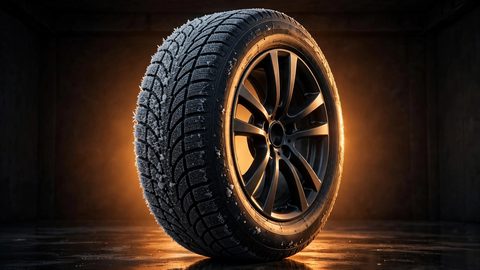
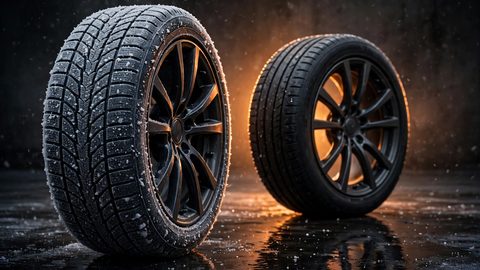
A winter tire is soft on purpose. Its compound stays flexible below 7°C, when all-season rubber stiffens and lets go, and its tread is cut with deep grooves and thousands of sipes that bite into snow and frost. That softness is the whole point — it is what shortens your stop on a cold morning. It is also why a winter tire wears faster than a harder all-season in the same service, on any car. Put that soft compound under an EV’s instant torque and battery weight and the three effects multiply rather than add.
There is a second winter-specific catch. A winter tire is finished as a winter tire long before it is legally worn out: Transport Canada advises against using tires worn close to 4 mm of tread on snow-covered roads, because the grooves can no longer clear enough snow and slush to grip. So an EV driver is not managing tread down to the legal minimum — the useful winter life ends at about 4 mm. Wearing through that usable band faster is the real cost of ignoring the habits below, and it is why a set that should have lasted several winters can be done in fewer.
Rotation is the fix Tesla actually specifies
Here is the good news: the single biggest countermeasure is cheap, scheduled and written in the manual. Tesla recommends rotating the tires every 10,000 kilometres (6,250 miles), or sooner if the tread depth difference between tires reaches 1.5 mm (2/32 inch) or more — whichever comes first. Rotation moves the harder-worked tires to the easier positions before the depth gap grows, so all four wear together and get replaced together, as one matched set.
Seasonal changeover is the natural moment to do it. Your winter set goes on in November and comes off in spring; have the depths measured and recorded at every swap, and rotate within the set at the swap if the numbers say so. A winter package from Sparky X includes free mobile installation at your home or workplace, with precision computer balancing — and Tesla packages include pre-programmed Bluetooth TPMS sensors, so the set that goes on is complete and read by the car. See how the packages work on the Tesla and EV tire service page, and check tire rebates before you buy a set of four.
Pressure and right foot: the two free habits
Under-inflation is a wear accelerator on any car, and winter manufactures it for free: tire pressure falls by roughly 1 psi for every 6°C drop in temperature. A set filled during a mild spell — like today — can be several psi low after Thursday night’s freeze. Low pressure makes the tread flex and scrub, which wears the shoulders and wastes range on top of it; our EV winter range guide covers what cold does to range and pressure together. Check pressures cold, in the morning, and set them to the driver’s door placard figure — never the maximum molded on the sidewall.
The other free habit is your right foot. You do not have to drive your EV like it is made of glass. But treating every green light as a launch, on a soft winter compound, is a choice with a tread bill attached. Ease into the throttle on cold rubber, leave room so you are not braking late and hard, and remember that deceleration loads the tires too — our guide to regenerative braking on ice covers how to manage that side of winter driving. Smooth is not slow. Smooth is what a full set of winter tread looks like in year three.
Frequently Asked Questions
Do EVs really wear out winter tires faster than gas cars?
Yes. An EV applies full torque instantly from a standstill and carries a heavy battery pack, and a winter tire’s compound is soft by design so it stays flexible in the cold. Stacked together, those three wear tread faster than the same winter tire on a comparable gas car. Tesla’s own guidance notes that aggressive driving accelerates tire wear and may require more frequent service.
How often should I rotate the tires on my Tesla?
Tesla recommends rotating every 10,000 kilometres (6,250 miles), or sooner if the tread depth difference between any tires reaches 1.5 mm (2/32 inch) or more, whichever comes first. On an EV the front-to-rear depth gap opens faster than most drivers expect, so measuring tread at every seasonal changeover — and rotating when the numbers call for it — is how a set wears evenly and gets replaced as a set.
Does my EV need XL winter tires?
If the factory tires are XL, yes. The load index on your driver’s door placard is the minimum the car was engineered for, and EVs commonly specify extra-load tires because of battery weight. A winter set must meet or exceed that index — XL stays XL. A lower-rated tire flexes more, runs hotter and wears faster, and it should not be fitted.
When is a winter tire worn out on an EV?
As a winter tire, at about 4 mm of tread. Transport Canada advises against using tires worn close to 4 mm (5/32 inch) on snow-covered roads, because the grooves can no longer move enough snow and slush to keep the rubber gripping. The tire may still be legal, but its winter life is over — which is why slowing wear down matters more on a heavy, high-torque EV.
The bottom line
Your EV is not eating winter tires because something is wrong with it. It is doing exactly what instant torque and battery weight do to a soft, cold-grip compound. The answer is not to stay on all-seasons — below 7°C they give up the grip the winter set exists to provide, and Thursday night’s drop to freezing is this week’s reminder. The answer is a correctly load-rated set of four, kept at placard pressure, rotated on Tesla’s 10,000 km schedule, and driven smoothly on cold rubber. Do those four things and the set lasts the winters it was built for.
Ready to sort the winter set? Browse the Toronto winter tire buying guide, read the FAQs, or see how mobile tire service works.
Book online: sparkyx.ca/book
Call or text: (647) 819-0490
Sparky X Mobile Tire Shop — fully mobile across Toronto, the GTA, Durham and York. Our office is at 60 Hoile Drive in Ajax; all service happens at your home or workplace. We come to you.