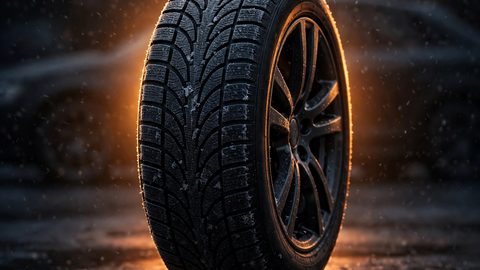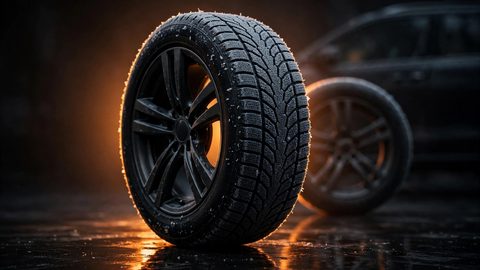

This weekend in the GTA is two different driving problems back to back. Saturday night and Sunday morning bring fog — mild air, highs of 11 to 13 degrees, damp roads and poor visibility. Then the pattern breaks: Monday turns windy and colder, and by Tuesday the forecast high is just 2 degrees with an overnight low near minus 3. That is the last mild weekend before the freeze, and it is the right time to get your tires sorted — while you can still check them in daylight, on a dry driveway, without frozen fingers.
Here is what fog does to grip, what a drop of more than 10 degrees does to tire pressure, and the short checklist that covers both before Monday morning.
The weekend setup: fog first, freeze second
The forecast for Toronto at the time of writing runs like this: Friday sunny with a high in the low-to-mid teens, Saturday partly cloudy around 11 to 12 degrees with fog developing at night, Sunday morning fog giving way to sun and a high near 13, Monday partly cloudy and windy with a high near 8 or 9 and an overnight low below zero, and Tuesday partly cloudy with a high of just 2 degrees. Rain or snow showers are also showing up later next week, around Thursday, November 26.
Neither half of that weekend is extreme on its own. The risk is the swing. Drivers set their expectations on the mild, foggy weekend — all-season tires feeling fine at 12 degrees, pressures that were checked weeks ago — and then Monday and Tuesday arrive with cold pavement, frost on shaded roads and bridges, and tires that have quietly lost pressure as the air cooled. Winter in the GTA rarely announces itself with one big storm. It usually starts exactly like this: a foggy weekend, then a hard turn.
Why fog is a tire problem, not just a visibility problem
Fog gets talked about as a headlights problem. It is also a grip problem. Fog means the road surface is damp, often for hours, and damp pavement mixed with road oil, fallen leaves and painted markings is slippery in exactly the places drivers brake and turn: intersections, off-ramps, crosswalks and lane markings. You cannot see the shiny patches, because in fog you cannot see much at all.
That combination — low visibility plus lower grip — is why following distance matters more in fog than almost any gadget. If the car ahead stops, your stopping distance is set by your tires and the wet surface, not by how quickly you notice. Slow down earlier than feels necessary, leave a much larger gap than usual, and brake gently and early so the tires are never asked for a sudden, maximum stop on a damp road. Use low-beam headlights, not high beams: high beams reflect off the water droplets in fog and light up a white wall in front of you, which makes it harder to see, not easier. If your car has fog lights, this is what they are for.
Tire condition shows up fast in these conditions. A worn tire that still feels acceptable on a dry afternoon has less tread depth to clear water from the contact patch, so it gives up grip sooner on a wet, foggy road. That is the same tread-depth story we covered in our guide to how long winter tires last in Ontario: winter grip falls off well before the legal minimum tread depth, at around 4 millimetres, because the tire needs depth to bite and to clear slush and water.
What the temperature drop does to pressure — and to rubber
Two separate things happen when the temperature falls from the teens to near or below zero, and both work against a car that is still set up for fall.
First, pressure falls with temperature. The standard guidance from tire makers is that pressure drops roughly 1 to 2 psi for every 10-degree Celsius drop in temperature — Continental publishes guidance in that same range. A swing from a 13-degree Sunday to a minus-3 Tuesday morning is a drop of about 16 degrees, so a tire that was correct on the weekend can be a couple of psi low by Tuesday without any leak at all. A couple of psi does not sound like much, but underinflated tires flex more, wear the shoulders faster, respond more slowly, and give up grip — and if the drop pushes a tire far enough below its target, the TPMS light will tell you about it on the coldest morning, which is exactly the pattern in our guide to the TPMS light in cold weather.
Second, rubber hardens. All-season tires are built to work across a wide range, but their compound stiffens as it gets cold, and below about 7 degrees they progressively lose the flexibility that lets the tread conform to the road. Winter tires use a softer compound that stays flexible in the cold, plus siping that bites on frost and ice. That 7-degree line is the whole basis of the seasonal switch, covered in our guide to when to switch to winter tires in Ontario. This weekend sits above that line. Tuesday does not.
The mild-weekend checklist: do these five checks now
None of this takes long, and all of it is easier at 12 degrees than at minus 3. Work through it on Saturday or Sunday, in daylight.
1. If your winter tires are not on yet, this is the window. A seasonal changeover in a mild, dry weekend is straightforward driveway work. Waiting until after the freeze means joining the rush that follows the first frosty morning — the same trap we wrote about in the GTA first-freeze weekend checklist. If your winters are on their own rims, make sure the positions were marked when they came off, so the set goes back on rotated rather than in the same order — our winter tire rotation guide explains why that marking matters.
2. Check pressures cold, to the placard. Check first thing in the morning, or after the car has sat for at least a few hours — driving heats the air inside the tire and inflates the reading. Fill to the figure on the driver-door placard, not the maximum printed on the sidewall. Then check again after the cold turn lands, because the weekend reading will not survive a 16-degree drop unchanged. And do not let air out hoping for more grip: we took that myth apart in letting air out of winter tires — underinflation shrinks the tire's ability to clear slush and makes handling worse, not better.
3. Read the tread honestly. Look across the full width of each tire, not just the easy outer edge. Centre wear points to overinflation, shoulder wear to underinflation, and one-sided wear to alignment. If a winter tire is near 4 millimetres, plan around it now, while there is still a mild weekend to act in — not after the first icy commute exposes it.
4. Check the things fog punishes. Headlights, fog lights if fitted, tail lights and wiper blades. In fog, being seen matters as much as seeing, and a smeared windscreen turns glare into a whiteout. Top up washer fluid with a winter-rated fluid while you are there.
5. Torque and the follow-up check. Any time wheels come off and go back on — a changeover included — fasteners are torqued to the manufacturer's specification, and they get checked again after about 50 kilometres of driving. That 50-kilometre re-torque check is part of the job, not an optional extra.
Driving the fog, then driving the freeze
For the foggy parts of the weekend: slow down, double your following distance, use low beams, and avoid sudden steering or braking inputs. Be especially careful on bridges, overpasses and shaded stretches, where damp pavement cools fastest — those are the same surfaces that freeze first when the temperature drops, which we covered in detail in black ice on GTA bridges. If visibility drops to near zero, the correct move is to pull well off the road, stop, and wait — a stopped car in the travelled lane in fog is a collision waiting for the next driver.
For Monday and Tuesday: expect frost even if the afternoon felt fine. Overnight lows below zero mean shaded side streets, ramps and bridge decks can carry ice on the morning commute while main roads look clear. Leave earlier, brake earlier, and remember that all-wheel drive helps a car get moving — it does not shorten a stop. That point matters enough that we gave it its own piece: AWD does not replace winter tires in Ontario.
How Sparky X can help this weekend
Sparky X is a fully mobile tire shop. Seasonal changeovers, tire rotation, and winter tire and wheel packages all happen in your driveway or workplace parking lot — you do not need to sit in a shop waiting room during the last mild weekend of the fall. When you are shopping for the next set, verified sizes and load ratings are in the tire and wheel shop, complete setups are on the tire and wheel packages page — packages include free mobile installation, and Tesla packages include pre-programmed Bluetooth TPMS — and current offers sit on the tire rebates page. The full service list is on the services page, and the common questions are answered in the FAQs. Sparky X serves Toronto, the GTA, Durham and York. Our office is at 60 Hoile Drive in Ajax; it is office only, and no vehicle service happens there.
Frequently Asked Questions
Why is fog dangerous for tires if the road is not icy?
Fog leaves the road damp for hours, and damp pavement mixed with road oil, leaves and painted markings offers less grip — especially where you brake and turn. With visibility low, you also get less warning before you need that grip. Slowing down early and leaving a much larger gap is what gives your tires time to do their work.
How much pressure do tires lose when it suddenly gets cold?
Tire-maker guidance puts it at roughly 1 to 2 psi for every 10-degree Celsius drop in temperature. A fall from a mild weekend in the low teens to an overnight low near minus 3 can therefore cost a couple of psi with no leak at all. Check pressures cold, fill to the driver-door placard, and check again after the cold turn arrives.
Should I switch to winter tires on a mild weekend, or wait for snow?
Switch in the mild window. Winter tires are about temperature, not just snow: below about 7 degrees, all-season compounds stiffen and lose flexibility, while winter compounds stay soft. A changeover done at 12 degrees on a dry driveway is easier and calmer than one done in the rush after the first frost — and your car is ready the morning the freeze actually lands.
Do high beams help in fog?
No. High beams reflect off the water droplets in fog and create a bright wall in front of the car, which reduces how far you can see. Use low-beam headlights — and fog lights if your car has them — slow down, and increase your following distance.
The bottom line
This weekend asks for two different kinds of care: patience and low beams in the fog on Saturday night and Sunday morning, and a car that is already on winter tires, at correct pressure, before the temperature falls through zero on Monday night. The checks take minutes at 12 degrees. They take a lot longer at minus 3, in the dark, with the commute already starting.
Want your changeover, rotation and pressure check done in your driveway this weekend, before the freeze lands? Book the visit online and we will come to you.
Book online: sparkyx.ca/book
Call or text: (647) 819-0490
Sparky X Mobile Tire Shop — fully mobile across Toronto, the GTA, Durham and York. Our office is at 60 Hoile Drive in Ajax; all service happens at your home or workplace. We come to you.