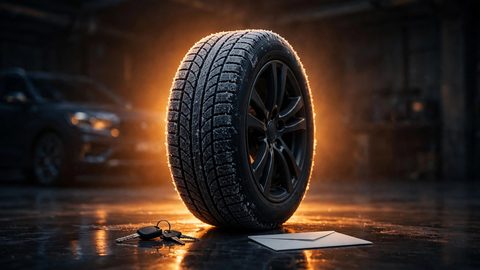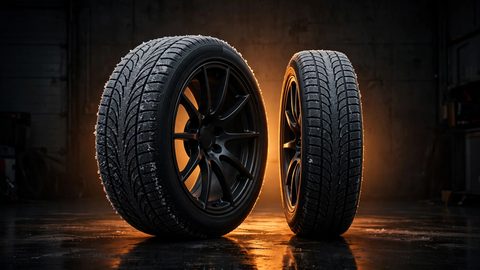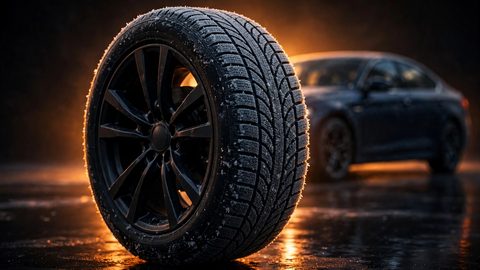

A pickup is not a tall car. It is a vehicle built to carry weight, tow weight, and keep working when the weather turns — and that changes how you buy winter tires for it. Toronto is about 8 degrees today, drops to about minus 2 tonight, and sits near 3 degrees on Tuesday with a sunset at 4:45 p.m. If your truck is still on its summer or all-season set, this is the week the load question matters, because the wrong winter tire on a truck is rarely the wrong brand. It is the wrong construction.
Here is the buying order that keeps GTA truck owners out of trouble: load first, then the severe-snow symbol, then tread, then rims and pressure. Get the first step wrong and no tread pattern fixes it.
Start with the door placard, not the tire wall
Open the driver door and read the placard. It lists the factory tire size, the construction the truck was built for, and the cold inflation pressure. That placard is the authority. If it calls for LT tires, the replacement winter set must be LT. If it calls for a passenger-metric size, you have a choice to make — but it is a choice with rules, not a free swap either way.
The size code tells you the construction at a glance. A size that starts with LT, such as LT265/70R17, is a light-truck tire: heavier cords, stronger sidewalls, and the ability to run higher pressures so it can carry more weight without building dangerous heat. A size that starts with P, such as P265/70R17, is a passenger-metric tire: lighter construction, a softer ride, and lower maximum pressure. Many half-ton trucks leave the factory on passenger-metric tires because most of them spend most of their lives running light. That factory choice is fine — until the way you use the truck changes.
The 10 percent rule nobody tells half-ton owners
Here is the detail that gets skipped at the counter. When a passenger-metric tire is fitted to a truck, van or SUV, its rated load capacity is reduced — the figure on the sidewall is divided by 1.10 to get what the tire is actually rated to carry on that vehicle. The tire did not get weaker. The rating system simply accounts for the harder loading a truck imposes compared with a car.
An LT tire in the same size gives you its full sidewall rating, and usually a higher one to begin with. So two winter tires that look identical on the rack can carry meaningfully different weight on your truck. If you tow a trailer, haul tools and material in the bed, run a plow, or carry a camper, do the load math with the reduced passenger figure before you decide the cheaper set is good enough. Our guide to how to read your tire size and load index walks through where each number lives on the sidewall.
Load range: match the job, do not max it out
LT winter tires carry a load range letter. Load range C is the 6-ply equivalent, built for up to about 50 psi. Load range D is the 8-ply equivalent, up to about 65 psi. Load range E is the 10-ply equivalent, up to about 80 psi, and it is the standard working spec for three-quarter-ton and one-ton trucks. The letter describes how much pressure the tire is built to hold, which is what lets it carry its rated load.
Higher is not automatically better. A load range E winter tire on a lightly used half-ton rides harshly, and if you soften it by dropping the pressure, you give back the load capacity you paid for and add sidewall flex and heat. Buy the load range your heaviest regular job needs: the placard spec for a daily-driven half-ton, a step up if that truck tows or hauls most weeks, and the factory LT spec — never less — on a three-quarter-ton or one-ton work truck. The one move that is never acceptable is downgrading a truck that came on LT tires to passenger tires to save money. That is how an overloaded tire ends up on a loaded truck in January.
The snowflake is the floor for a truck, too
Whatever the construction, a GTA winter tire needs the three-peak mountain snowflake symbol on the sidewall. That marking means the tire met a severe-snow traction standard. An M+S marking alone does not — it describes a tread pattern, not tested snow performance. We make the same point for cars in our winter tire buying guide for Toronto drivers, and it applies with more force to a truck, because a truck's weight helps it get moving and then works against it when it has to stop or turn.
That last part deserves emphasis. Four-wheel drive and a heavy truck feel unstoppable pulling away from a light on packed snow. The same weight and momentum lengthen every stop, and no drivetrain shortens a braking distance — tires do. If you have heard that a good all-terrain with the snowflake symbol makes a separate winter set unnecessary, read our breakdown of all-weather versus winter tires before you bet a loaded truck on it: an all-terrain or all-weather tire can be a legitimate winter-rated choice for some drivers, but a dedicated winter compound stays flexible and keeps biting at temperatures where harder compounds give up.
An empty bed is its own handling problem
Trucks have a winter quirk cars do not. A pickup's weight sits mostly over the front wheels, so an empty bed means a light rear end — the end that steps out first on a slippery on-ramp or a polished side street in Scarborough or Etobicoke. Winter tires on all four corners are non-negotiable for the same reason we give every driver in two winter tires are not enough: mixing grip front to rear on a rear-drive-biased truck is an invitation to swap ends.
Some owners add weight over the rear axle for traction. If you do, secure it properly so it cannot shift or become a projectile in a hard stop, keep it modest, and remember it is a supplement, not a substitute: it does nothing for front-tire steering or braking grip. The real fix is four matched winter tires at the correct pressure, and a gentler right foot until the truck is rolling straight.
Pressure, rims, and the working-truck checks
LT tires run higher pressures than passenger tires, and the right number is the placard figure for the load you are carrying — not the maximum molded on the sidewall, and not the number your car uses. Pressure also falls as temperature drops, roughly 1 psi for every 6-degree Celsius fall, so a set filled during last week's mild spell can be low tonight when it drops below zero. Check them cold, in the morning, before the truck works.
If you run a second set of winter rims, the same truck rules apply to the wheels: correct bolt pattern, hub bore, offset and load rating for the truck, not just a rim that bolts on. A wheel that carries a car fine is not automatically rated for a loaded pickup. And after any swap, put the re-torque check on your list after the first 50 to 100 kilometres, exactly as we lay out in our re-torque guide — heavy wheels on a working truck settle the same way any wheel does.
How Sparky X can help
Sparky X is a fully mobile tire shop, so your truck gets its winter set in your driveway or at your workplace — no shop trip with a loaded bed. Verified sizes and load ratings are in the tire and wheel shop, complete setups are on the tire and wheel packages page — packages include free mobile installation, and Tesla packages include pre-programmed Bluetooth TPMS — and current offers sit on the tire rebates page. The full service list is on the services page, and common questions are answered in the FAQs. Sparky X serves Toronto, the GTA, Durham and York. Our office is at 60 Hoile Drive in Ajax; it is office only, and no vehicle service happens there.
Frequently Asked Questions
Can I replace my truck's LT tires with passenger tires for winter?
No, not if the truck came from the factory on LT tires. A passenger-metric tire carries less load, and on a truck its rating is reduced further — the sidewall figure is divided by 1.10. Downgrading construction on a truck that tows or hauls risks running an overloaded tire. Match or exceed the placard specification.
My half-ton came on passenger tires. Should I upgrade to LT winters?
Only if your use justifies it. If the truck mostly commutes and carries light loads, a passenger-metric winter tire that meets the placard load index is the comfortable, correct choice. If you tow, haul heavy bed loads, or work the truck regularly, an LT winter set in the right load range is the safer buy — expect a firmer ride in exchange.
Is a higher load range always better for winter?
No. Load range should match the job: C for lighter duty, D for half-tons that tow often, E for three-quarter-ton and one-ton work trucks. An over-specified tire rides harshly on a light truck, and dropping its pressure to soften the ride gives back the load capacity and adds heat-building flex.
Does four-wheel drive mean my truck is fine on all-seasons?
No. Four-wheel drive helps a truck get moving; it does not shorten stopping distances or add cornering grip, and a heavy truck needs more distance to stop, not less. Below 7 degrees, all-season compounds stiffen and lose grip. A winter tire with the three-peak mountain snowflake symbol is what gives a truck its winter stopping and steering.
The bottom line
Buy truck winter tires in the right order: load first, snowflake second, tread third. Read the door placard, respect the 10 percent passenger-tire reduction, match the load range to the work the truck actually does, and never downgrade a truck that came on LT tires. Tonight drops below zero and Tuesday stays cold — a driveway check today beats discovering an overloaded or under-rated set with the bed full and the road white.
Want your truck handled at home or at the yard? Book online and we will come to you.
Book online: sparkyx.ca/book
Call or text: (647) 819-0490
Sparky X Mobile Tire Shop — fully mobile across Toronto, the GTA, Durham and York. Our office is at 60 Hoile Drive in Ajax; all service happens at your home or workplace. We come to you.