
All-Weather vs Winter Tires: Which Do You Actually Need?
Every October, my phone starts ringing with the same question: "Can I just get all-weathers and skip the whole winter tire thing?" It's a fair question. Swapping tires twice a year is a hassle, storing a second set is annoying, and all-weather tires promise you can have it both ways.
Here's the honest answer from someone who does this for a living across the GTA and Durham: sometimes, yes. Sometimes, absolutely not. It depends on where you drive, how you drive, and what winter actually throws at you. Let me break it down so you can make the call with real information instead of marketing.
What "All-Weather" Really Means
First, let's clear up the confusion, because tire companies have not done you any favours here.
All-season tires are NOT all-weather tires. All-seasons are really three-season tires. Their rubber compound hardens up as temperatures drop, and by the time you're below about 7°C, they've lost a big chunk of their grip. They carry no winter certification whatsoever.
All-weather tires are a different animal. They carry the 3-peak mountain snowflake symbol (3PMSF) on the sidewall, which means they passed an actual standardized test for traction in medium-packed snow. That's the same symbol you'll find on a dedicated winter tire. An all-weather tire is genuinely engineered to handle cold, snow, and ice while still being drivable year-round.
So when someone asks "all-weather vs winter tires," they're asking about two products that both take winter seriously. The question is how seriously.
Where All-Weathers Win
Let's give all-weathers their due, because they're genuinely good at what they're designed for.
One set, all year. This is the big one. No seasonal swap, no storing a second set in your garage, no booking appointments twice a year. For a lot of people, that convenience alone is worth real consideration.
They're excellent in the shoulder seasons. That messy stretch from October to December and March to May, when it's 2°C one day and 12°C the next? All-weathers handle that beautifully. Dedicated winter tires actually wear faster and feel squishy when it's warm, so during those in-between months, all-weathers are arguably the better tire.
Modern ones are legitimately good in snow. I'm talking about tires like the Michelin CrossClimate 2, the Bridgestone WeatherPeak, or the Goodyear Assurance WeatherReady 2. These aren't the compromised all-weathers from ten years ago. In light to moderate snow, on plowed roads, they perform well.
Cost over time. One set instead of two means one purchase, one installation, no storage fees. If your driving situation fits, the math is simple.
If you want to browse what's available, you can shop tires online through our store anytime!
Where Winters Win
Now the other side, and I won't sugarcoat it.
Ice braking. This is where dedicated winter tires earn their keep. Their rubber compounds stay soft and grippy at temperatures where even all-weather rubber starts to firm up. On sheer ice, a proper winter tire like a Bridgestone Blizzak WS90 or Michelin X-Ice Snow will stop shorter than an all-weather. Not a little shorter. Meaningfully shorter. When the car in front of you panic-brakes on the 401 in January, that difference is everything.
Deep snow and slush. Winter tires have more aggressive tread patterns with deeper grooves and thousands of tiny biting edges called sipes. In unplowed snow, heavy slush, and that horrible packed-snow-plus-ice combo you get on side streets after a storm, winters pull away from all-weathers clearly.
Sustained deep cold. All-weathers are rated for winter, but they're still a compromise. When it's -20°C for two straight weeks in February, a dedicated winter compound is simply in its element in a way an all-weather can't match.
Nobody who drives through a real Ontario winter on proper winter tires ever says "I wish I'd gotten less grip." That's worth sitting with.
The Honest GTA Verdict
Here's where I stop talking in generalities and talk about you, because the right answer genuinely depends on your commute.
You can honestly get away with all-weathers if: you mostly drive within Toronto, your routes are main roads that get plowed fast, you can work from home on the worst storm days, and you're a calm, defensive driver. Downtown Toronto, North York, Scarborough, Etobicoke — the plows hit the arterials quickly, and a good set of all-weathers will handle most of what a typical Toronto winter throws at you. If that sounds like your life, all-weathers are a smart, honest choice. Don't let anyone shame you into buying winters you don't need.
You should get dedicated winters if: you commute on the 400-series highways daily, you live in Durham, York Region, or anywhere with back roads and long rural stretches, you drive early mornings before plows have been through, or you simply can't skip work when it storms. Ajax to downtown on the 401 at 6 AM in January is a different universe from Queen Street at noon. If your tires are the only thing between you and a ditch on an unplowed sideroad, get the winters. Full stop.
The grey zone: plenty of drivers in places like Markham, Richmond Hill, Pickering, and Whitby go either way. If you're on the fence, ask yourself one question: on the worst winter morning of last year, would you have been comfortable driving on noticeably less grip than a full winter tire? If yes, all-weathers. If that thought makes you nervous, winters.
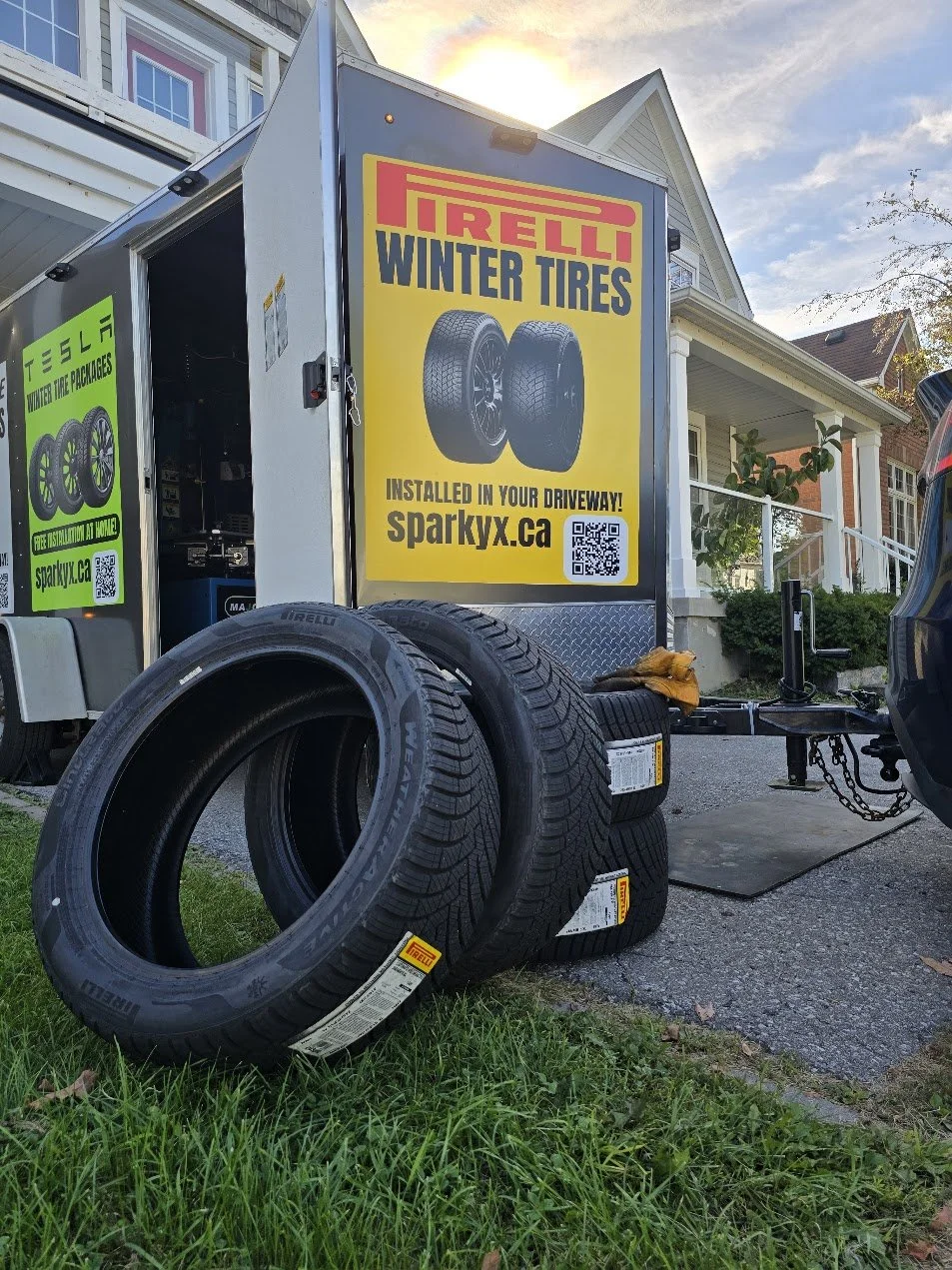
One more thing worth knowing: tire and wheel packages from us include free mobile installation for the first fall-winter season. We come to your driveway, so the "hassle" argument against winter tires gets a lot weaker.
Top Picks for Each
No sponsored nonsense here. These are the tires I see performing well on GTA roads, year after year.
All-weather standouts:
Michelin CrossClimate 2 — the benchmark. Excellent wet grip, quiet, strong snow performance for an all-weather.
Bridgestone WeatherPeak — a very strong all-weather option with confident winter manners.
Goodyear Assurance WeatherReady 2 — great choice if tread life and all-around competence matter to you.
Toyo Celsius II — a smart pick if you want winter capability with a focus on variable conditions.
Winter standouts:
Bridgestone Blizzak WS90 — the winter tire everything else gets compared to. Outstanding ice grip.
Michelin X-Ice Snow — superb braking and longevity for a winter tire.
Continental VikingContact 8 — the Nordic ice specialist. Built for deep-cold Scandinavian winters, right at home on Ontario ice.
Before you buy, check our tire promos page at for current deals, and take a look at our tire rebates page — manufacturer rebates change through the season and they're worth catching.
Still Not Sure? Let's Talk Tires.
Shop tires online, learn more about mobile tire installation or just call (647) 819-0490 and ask. We come to your driveway anywhere in the GTA and Durham, and I'd rather talk you into the right tire than sell you the expensive one.
QUICK FAQ
Are all-weather tires as good as winter tires in snow? In light to moderate snow on plowed roads, a good all-weather gets surprisingly close. In deep snow, heavy slush, and on ice, dedicated winter tires are clearly better. "Close enough for my commute" is a valid answer for a lot of GTA drivers.
Can I run winter tires all year to save money? Technically yes, practically no. Winter rubber is soft. Run it through a hot July and it'll wear down fast, feel vague in corners, and cost you more in the long run than just doing the seasonal swap properly.
Do all-wheel drive cars still need winter tires? AWD helps you get moving. It does nothing to help you stop or turn. Every winter, AWD SUVs end up in ditches because their drivers thought drivetrain replaced rubber. It doesn't.
How long do all-weather tires last compared to winters? A quality all-weather used year-round typically lasts longer in total kilometres than a winter tire used only in winter, simply because winter compounds are softer. But remember: one set doing all the work versus two sets splitting the job. Run the math on your own driving.
