How to Read Your Tire Size and Load Index
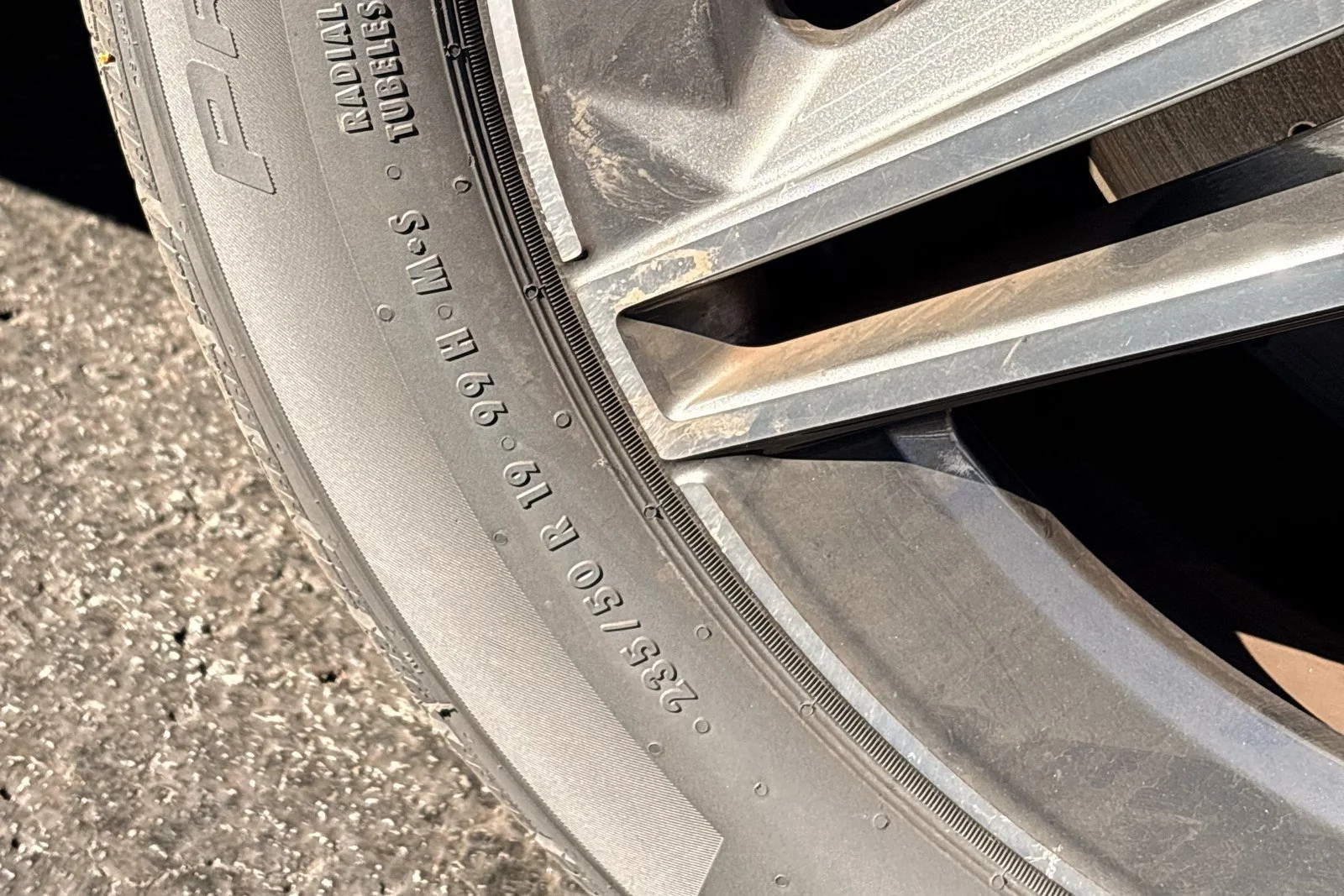
Every tire on your car has its full spec sheet moulded into the sidewall. The problem is it's written in code — and most people only learn to read it after they've bought the wrong tire. This takes five minutes to learn, and it will save you real money and real headaches, especially right now, when half the GTA is ordering winter tires.
The Size: 235/60R18, Decoded
Take the most common size I install in Durham and the GTA: 235/60R18.
235 — the tire's width in millimetres, sidewall to sidewall.
60 — the aspect ratio. The sidewall height is 60% of the width. Lower number, shorter sidewall, sharper handling, harder ride, easier rim damage on potholes.
R — radial construction. Everything on the road today is radial; if you ever see a D or B here, you're looking at something that doesn't belong on your car.
18 — the rim diameter in inches. This one is non-negotiable: an 18-inch tire only fits an 18-inch rim.
Some sizes start with letters. P means passenger, LT means light truck — LT tires are built for heavier loads and higher pressures, and they matter if you drive a pickup or a big SUV. Some European sizes skip the letter entirely. If your door placard says LT and you buy P, or the other way around, you have the wrong tire even if every number matches.
The Load Index: The Number People Ignore and Shouldn't
Right after the size you'll see something like 104T or 99H. That first number is the load index — the maximum weight one tire is rated to carry. It is not kilograms or pounds; it's a code:
91 = 615 kg (1,356 lb) per tire
95 = 690 kg (1,521 lb)
99 = 775 kg (1,709 lb)
102 = 850 kg (1,874 lb)
104 = 900 kg (1,984 lb)
106 = 950 kg (2,094 lb)
Here's the rule that actually matters: each tire must be rated for at least half of your vehicle's heaviest axle weight (the GAWR, printed on the same door placard as your tire size). Your factory tires meet it by design. Where people get burned is replacements — a cheaper tire in the "same size" with a lower load index. It fits the rim. It is still the wrong tire, and on a loaded SUV or an EV carrying a heavy battery, it's a safety problem, not a paperwork problem.
Going up in load index is fine. Going down is not. If a quote you're looking at doesn't list the load index, ask — any tire and wheel package worth buying will state it plainly.
You'll also see XL (extra load) on some sidewalls. XL tires carry more weight at higher pressure thanks to a reinforced casing. A lot of modern crossovers and EVs spec XL from the factory — match it when you replace.
The Speed Rating: The Letter After the Number
The letter paired with the load index is the speed rating — the maximum speed the tire is built to sustain: S = 180 km/h, T = 190, H = 210, V = 240. Nobody's cruising the 401 at 210. But the letter also tracks with construction stiffness and heat tolerance, which is why matching your placard spec matters more than the top-speed number itself.
Winter tires are the one honest exception. Most carry T or even Q/R ratings — lower than your all-seasons — because that's the trade for a soft, cold-gripping compound. That's normal and expected for a winter set. What you don't do is fit a lower-rated summer or all-season replacement and call it the same thing.
The Other Markings Worth 30 Seconds
DOT date code. The last four digits of the DOT string are the week and year the tire was made: 3224 = week 32 of 2024. Rubber hardens with age even sitting on a shelf. I don't recommend running tires past about six seasons of service life, and you should side-eye anything being sold as "new" that's already four years old.
M+S vs the three-peak mountain snowflake (3PMSF). M+S is a tread-geometry claim with no cold-weather test behind it. The mountain-snowflake symbol means the tire actually passed a snow traction test. In Ontario, that symbol is also what insurers look for on the winter tire discount.
Treadwear / Traction / Temperature grades. Government-mandated ratings (like 500 A A) printed on passenger tires. Useful for comparing two tires from the same brand; the scales aren't consistent enough across brands to shop by.
Rotation arrows and "outside" marks. Directional and asymmetric tires only fit one way. Mount them backwards and you've bought noise, poor wet grip, and uneven wear.
Where to Confirm Your Spec in 10 Seconds
Don't read the sidewall of the tire that's on the car and assume it's right — a previous owner may have fitted whatever was cheap. The truth lives on the driver's door jamb placard: factory size, load and speed spec, and the correct pressures for your car (not the max pressure moulded on the tire — never inflate to that). Your owner's manual repeats it. When you shop tires and wheels online, shop by that placard spec — or by size, and verify the load index before checkout.
Not Sure What Tire Size To Order?
We can help! Call us now at (647) 819-0490, or contact us online?
The Bottom Line
Size gets the tire on the rim. Load index and speed rating make it the right tire for the car. Read all three, check the date code, and you'll never be the person who saved $80 on a set that was never rated for their vehicle. If the numbers on a quote don't match your placard, walk — or call someone who'll check them with you.
Booking for the winter rush? Sparky X Mobile Tire Shop installs at your home or office across the GTA and Durham — tire and wheel packages include free mobile installation for the first fall–winter season, and Tesla packages include pre-programmed Bluetooth TPMS sensors. Book online or call/text (647) 819-0490. Current manufacturer offers are on the tire rebates page, and seasonal deals are on promos.
FAQ
Can I use a tire with a higher load index than my placard says?
Yes. Higher is fine — XL-rated replacements are common and often an upgrade. Lower is never fine: each tire must carry at least half your heaviest axle's rated weight.
My winter tires have a lower speed rating than my all-seasons. Is that safe?
Yes — that's normal. Winter compounds trade top-speed capability for cold grip, so T-rated winters under H-rated all-seasons is standard practice. Just drive them like winter tires.
The size matches but the tire still looks wrong. What else could differ?
Width is only one number. A different aspect ratio changes overall diameter, which throws off your speedometer and gearing feel. Stay within about 3% of the factory overall diameter, and match the load index.
Where is the load index on my tire?
Immediately after the size, before the speed letter — the "104" in 235/60R18 104T. If you're comparing quotes, our services page explains what a proper mount, balance, and install includes.