Are Your Stored Winter Tires Still Safe to Use?
Every fall, I show up to a changeover, pull a customer's winter set out of the garage corner, and find a tire that should never go back on a car. Sometimes it's bald. Sometimes it's cracked like a dry lake bed. Sometimes it looks perfect — and it's nine years old with rubber hard as a hockey puck.
Your winters have been sitting since April. Heat, sunlight, and time have been working on them all summer. Before you book your changeover, spend ten minutes checking the set. Here's exactly what to look at.
Check 1: Tread depth — winters wear out before they're bald
A winter tire doesn't need to be bald to be done. Winter grip comes from deep tread channels that clear slush and edges that bite into snow and ice. As the tread wears down, both disappear.
The legal minimum tread depth in Ontario is 1.6 mm. That's the legal floor for any tire — it is not a safe working depth for a winter tire. By the time a winter tire is anywhere near that, its snow and slush performance is mostly gone.
The working rule: a winter tire at about 4 mm of tread or less has given up most of what made it a winter tire. Measure in a few spots across the tread, not just the middle — and check all four tires, because they don't wear evenly. If last season ended close to that line, this season will finish below it.
Also look at how they wore. One edge chewed down, a feathered pattern, or a bald stripe down the centre all point at alignment, inflation, or suspension issues from last season. Putting a badly worn tire back on just repeats the problem — and we'll flag it at your changeover if we see it.
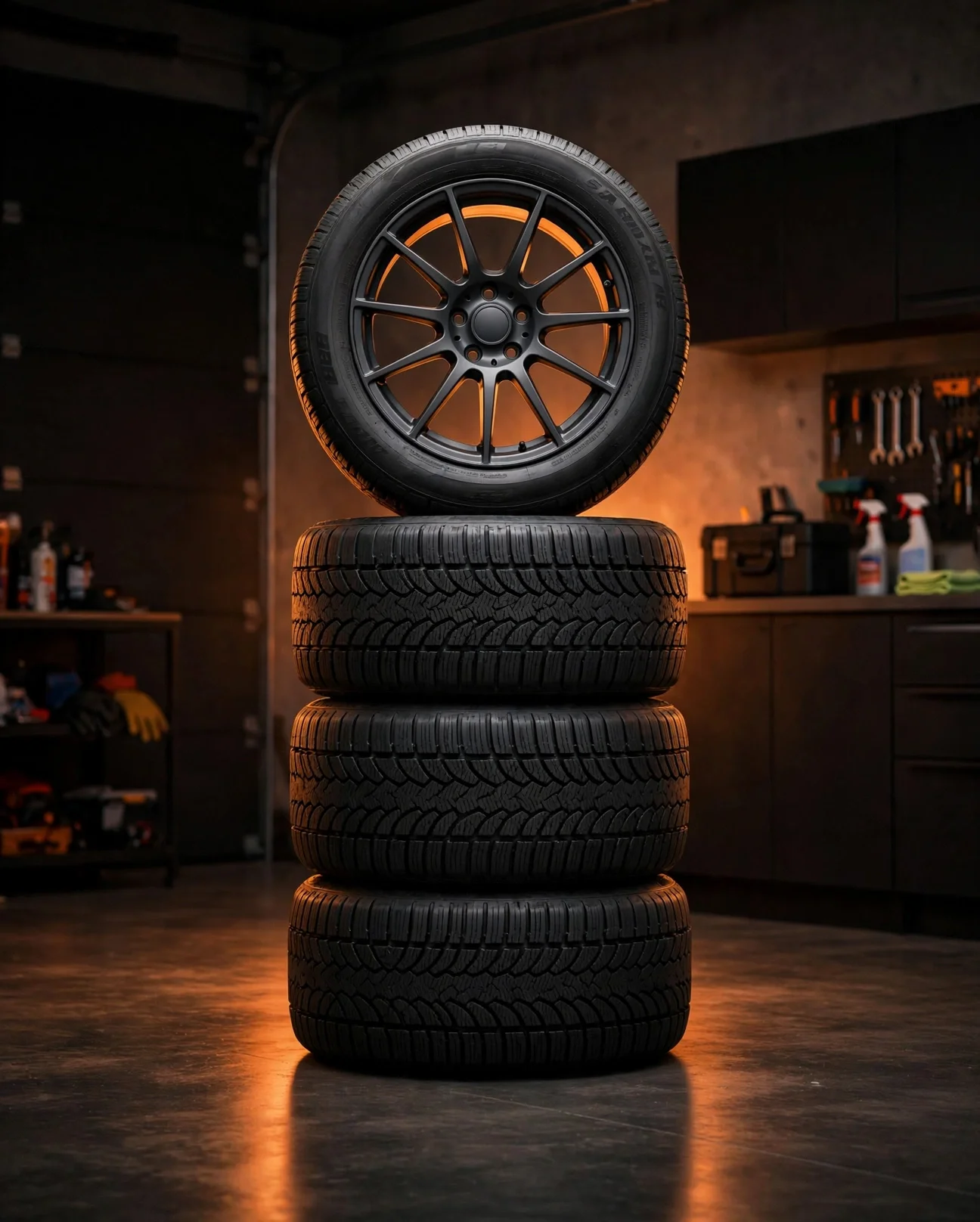
Book Your WInter Tire Change With Sparky X!
Book our mobile tire change service today! Tel (647) 819-0490
Check 2: The date code — age kills winter tires quietly
Find the DOT code on the sidewall. The last four digits are the week and year the tire was made. A code ending in 2319 means the tire was built in the 23rd week of 2019.
Why it matters more for winters than any other tire: winter rubber is a soft compound designed to stay flexible in the cold. Heat cycles and age harden it. A hardened winter tire can have deep tread and shiny sipes and still slide on ice like a summer tire — the tread pattern is there, but the rubber no longer does its job.
Tire makers generally recommend having tires inspected annually once they're five years old and replacing them by ten years regardless of tread. For winter tires doing safety duty in Ontario, be stricter with yourself: a set that's seven or eight seasons old deserves a hard look even if the tread measures fine. If you can't remember when you bought them, the date code remembers for you.
Check 3: Cracking, bulges, and damage
Run your eyes and hands over both sidewalls and between the tread blocks. You're looking for:
Cracks and crazing — fine cracks in the sidewall or between tread blocks mean the rubber is drying out, usually from heat, sun, or ozone in storage. Surface crazing is aging; deep cracks are a failure waiting for a pothole.
Bulges — any bubble or lump in the sidewall means internal damage. That tire is done. No debate, no "one more season."
Cuts, chunks, and embedded objects — check the tread face for nails or screws that went in last spring and held air just long enough to park the car.
Old repairs — a plug from two seasons ago is worth a second look before you trust it at highway speed in January.
Check 4: The rims and hardware
If your winters are stored mounted on their own rims, check the rims too:
Corrosion at the bead seat — the edge where tire meets rim. Road salt attacks it all winter, and it keeps creeping in storage. A corroded bead seat means slow leaks all season.
Bent lips or cracked spokes — last season's pothole souvenir. A bent rim won't seal or balance properly.
Valve stems — rubber stems crack with age just like sidewalls. A cracked stem leaks, and it leaks more in the cold.
TPMS sensors — if your winter rims carry sensors, their batteries are sealed units with a finite life, typically five to ten years, and they drain whether the wheels are on the car or in the garage. A set that was fine in April can wake up in November with a dead sensor and a dash light. We check and reset TPMS at every changeover; if a sensor has died, we'll tell you before it becomes your problem on the road.
How storage treats them
Where the set sat all summer matters. Tires stored in a hot garage against a sunny wall, or near a furnace, pool equipment, or anything that gives off ozone, age faster than tires stored cool, dark, and dry. Stacked flat or hung, off concrete if you can, out of direct sun. If your set spent the summer in the worst corner of the garage, weigh that when you're judging the checks above.
So — pass or replace?
A stored set is worth reinstalling if the tread is healthy (comfortably above 4 mm), the date code is reasonable, the rubber is crack-free and still supple, there are no bulges or damage, and the rims and stems are clean.
It's replacement time if any one of these shows up: tread at or under 4 mm, deep cracking, a bulge, a tire well past its prime by the date code, or a rim that won't seal. One bad tire means the conversation is about the set — mixing one new winter with three worn ones gives you uneven grip corner to corner, which is its own hazard.
If the set fails the check, do the math before the rush peaks. New winter tires and tire-and-wheel packages are on Shop Tires & Wheels, and fall manufacturer rebates are tracked on our Tire Rebates page — most brands run them through the fall season, and they're worth checking before you buy. Every tire-and-wheel package includes free mobile installation for the first fall–winter season.
And if the set passes? Book the changeover early. The first cold snap fills the calendar across the GTA, and the drivers who checked their tires in October are the ones rolling on the first snowy morning while everyone else is on a waitlist. Book online at Mobile Tire Service Bookings or call (647) 819-0490 — we do the changeover in your driveway, torque to spec, set pressures, and we'll give your stored set this same inspection before it goes on. If something fails, you hear it from us on the spot, not from a slide in January.
Planning your timing? Read When to Switch to Winter Tires in Ontario for the temperature rule that decides it.
FAQ
How long do winter tires last in storage?
Storage doesn't pause the clock. Rubber ages whether the tire is rolling or sitting, and winter compounds harden as they age. Check the DOT date code: tires should be inspected annually from five years old, and most manufacturers say replace by ten years regardless of tread. Heat and sunlight in storage speed the aging up.
Can I use winter tires with 4 mm of tread left?
Legally, yes — the minimum is 1.6 mm. Practically, a winter tire at 4 mm has lost most of its slush-clearing and snow-biting ability. It will feel fine on bare pavement and let you down in the first real snowfall. Treat 4 mm as the start of replacement shopping, not the start of another season.
My stored tires look fine but they're eight years old. Are they safe?
Looks are the trap. The tread pattern survives; the compound doesn't. Aged winter rubber hardens and loses cold grip even with deep tread. At eight years, have them inspected before you rely on them — and budget for replacement.
Should winter tires be stored on or off the rims?
Either works if they're stored cool, dark, and dry. Mounted sets hold their bead seal and are faster to change over; unmounted tires should be stored uninflated, stacked or hung, away from heat sources and sunlight. What damages them is heat, UV, and ozone — not the position.