
Winter Tires: Do You Need a Second Set of Rims?
Every October, the same question hits my inbox from a dozen GTA drivers: "Should I just buy a set of rims for my winter tires, or keep swapping the rubber on the same wheels?"
It's a good question. And the answer is the one I give on every driveway: it depends on your car, your budget, and how many winters you're keeping it. But for most people driving in Ontario, a second set of rims is the smarter move. Here's why — straight, no sales pitch.
The real math: what remounting costs you every year
Here's what most people don't realize. There's a big difference between a changeover on rims and one that isn't.
When your winter tires are already mounted on their own rims, a seasonal swap is a wheel-off, wheel-on job. Takes me about 30 minutes in your driveway. When your winter tires are loose rubber and need to be mounted onto the same rims as your summers — that's a full demount, mount, and balance on all four corners. Two hours of work, every time, twice a year.
That time difference shows up in your wallet. An on-rim changeover with us runs $120. An off-rim changeover — mounting and balancing four tires onto your existing rims — is $220. Do that twice a year for five winters and you've paid $1,000 in mounting labor alone. A set of basic steel rims costs less than that, and the rims don't wear out — you'll still be running them when you're on your third set of winter tires.
That's the core of the argument. Not convenience. Not looks. Math.
There's one more piece: if you buy a full tire and wheel package from us, mobile installation is free for the first fall-winter season. Buy just the tires and put them on your existing rims, and mounting and balancing runs $160. Same story — the package wins on cost from day one. And if you're buying the rubber fresh this fall, check the current manufacturer tire rebates — they apply to the tires, not the rims.
Your tire beads will thank you
There's a mechanical reason too, and it's not marketing. Every time a tire gets mounted or demounted, the bead — the edge that seals against the rim — takes stress. Do that twice a year for several years and you get bead damage, slow leaks, and tires that won't seal properly anymore.
Tires that stay mounted on their own rims for life only ever see a torque wrench. They last longer, they hold air better, and you never get that annoying slow leak in February that started because a bead got nicked in November.
Shop Winter Rims
Pick the best steel or alloy rims for your winter tires from Sparky X! Huge and discounted inventory awaits!
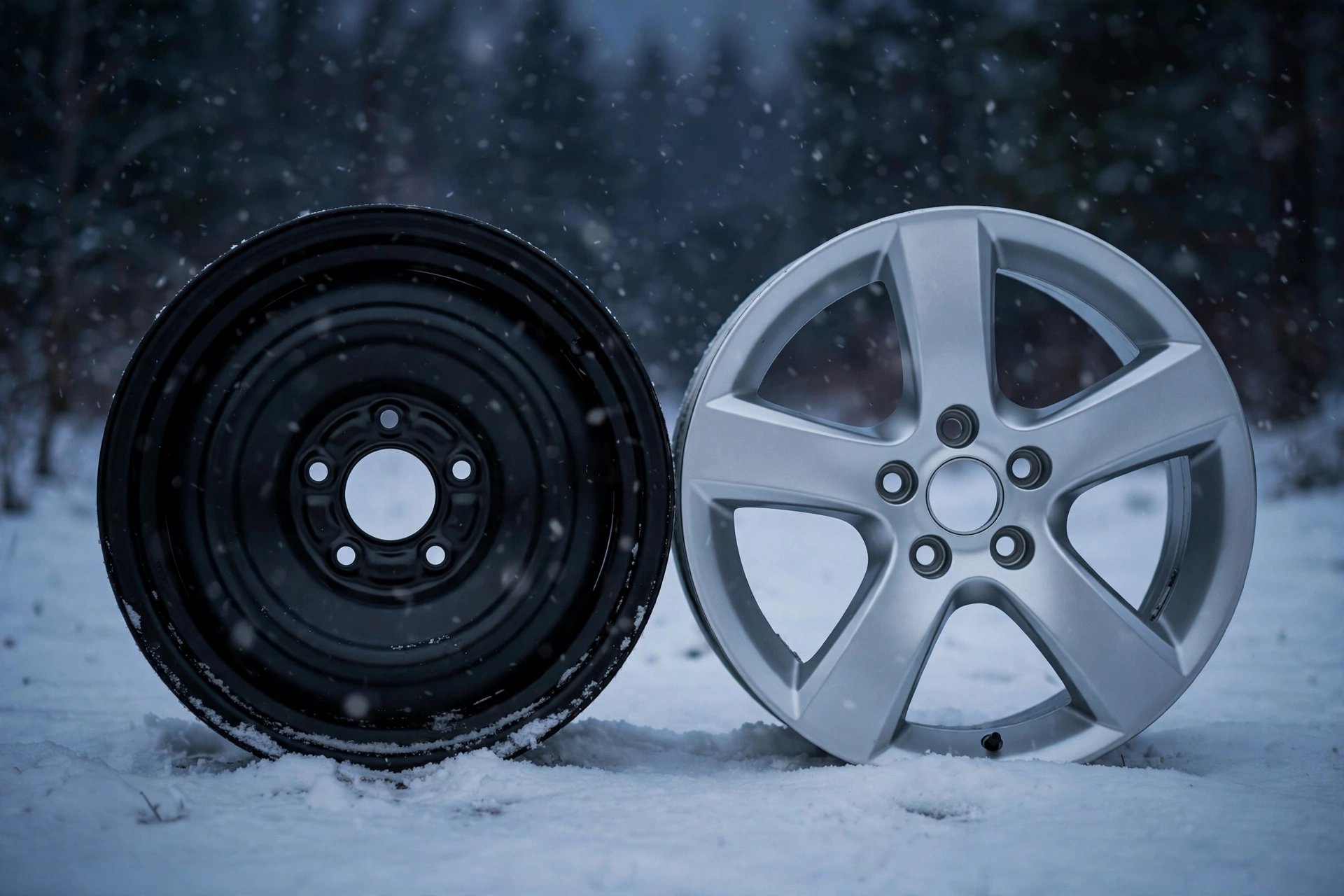
Steel or alloy for your winter set?
Once you've decided on a second set, the next question is steel or alloy. Honest breakdown:
Steel wheels are the cheapest option, full stop. They take road salt, slush, and pothole hits without cosmetic damage because there's nothing pretty to ruin. They rust — that's the trade-off — but rust on a winter wheel is cosmetic, not structural. For a daily driver, steel is the rational pick.
Alloy wheels are lighter, which helps a little with ride and handling, and they look a lot better behind a low-profile tire. The catch: road salt is brutal on them. Polished or clear-coated finishes get eaten alive by salt and stone chips — you'll see white spider-web corrosion creeping under the clear coat by spring. If you go alloy for winter, painted finishes survive much better, and you'll pay more up front.
My rule of thumb: steel for the family SUV, alloy for the car you care about looking good. And if someone's buying used rims — marketplace and Kijiji are full of them every fall — read my guide on buying used tires on Kijiji first. The same red flags apply to used rims: check for bends, cracks, and correct fitment before money changes hands.
Minus sizing: the smart play most people miss
Here's the move that saves people the most money and gets them the best winter traction: go down a wheel size.
If your car came with 19-inch rims, there's a good chance you can run 18-inch rims with a taller tire sidewall in winter. The overall diameter stays the same — which matters, because your speedometer, ABS, and traction control all expect a specific tire diameter — but the setup is narrower with more sidewall.
Narrower tires cut through slush and unplowed snow instead of floating on top of it. Taller sidewalls shrug off potholes that would crack a low-profile summer setup. And smaller rims and tires almost always cost less — sometimes a lot less.
One caution: you can't always go smaller. Big brake calipers on performance trims sometimes won't clear a smaller rim. This is a fitment check, not a guess — bolt pattern, offset, center bore, and brake clearance all have to be right. If you're buying a tire and wheel package, that homework's already done for you.
Don't skip the TPMS sensors
This is where people cheap out and regret it. If your car has a tire pressure monitoring system — and anything built in the last decade does — your winter rims need their own set of TPMS sensors.
No sensors, no problem physically. But you'll have a warning light staring at you from October to April, and more importantly, you lose the low-pressure warnings that actually matter in winter, when cold air drops your tire pressure overnight.
On a second set of rims, the sensors are a one-time purchase. They last for years, through multiple sets of tires. Cheap insurance, and any decent shop clones or programs them to your car on the spot.
Tesla owners, pay attention: modern Teslas use Bluetooth TPMS sensors, not the old radio-frequency kind. A cheap set of generic sensors won't pair with the car. Our Tesla winter packages ship with pre-programmed Bluetooth TPMS sensors already installed — one less thing to fight with in a cold driveway. More on that in the Model Y winter tire guide.
When rims are NOT worth it
Fair's fair — a second set of rims isn't right for everyone:
You're leasing and returning the car this spring. Don't buy hardware for a car you're handing back.
You're running all-weathers year-round. If you've already decided on all-weather tires, there's nothing to swap. No swap, no rims needed.
You have nowhere to store them. Condo life in the GTA means the second set lives in a storage locker or a corner of the underground garage. If that's a dealbreaker, it's a dealbreaker. Just know you're choosing the $220 off-rim changeover twice a year instead.
You drive very little in winter. If the car barely moves from November to March, the math doesn't work. Spend the money on good rubber instead.
What to check before you buy rims
Fitment is everything. Wrong rims are expensive paperweights:
Bolt pattern must match your car exactly. Close doesn't count.
Center bore should be hub-centric — the wheel centers on the hub, not just the lug nuts.
Offset needs to be in spec, or the tire rubs the fender or the suspension.
Load rating has to meet or exceed your vehicle's requirement. This matters especially on EVs and heavy SUVs — they're heavier than you think.
Brake clearance if you're minus sizing. Check before you buy.
This is exactly why I steer most people toward packages rather than DIY parts-hunting. A tire and wheel package arrives balanced, fitted, and ready to bolt on — no fitment roulette, no TPMS programming headaches, and the mobile installation is free for the first season.
The bottom line
If you're keeping your car for three or more winters, a second set of rims pays for itself in avoided mounting costs, your tires last longer, and every changeover takes 30 minutes instead of two hours. Steel for value, alloy for looks, minus-size when you can, and always put TPMS sensors in the winter set.
Book before the rush. Every October the GTA runs out of changeover appointments, and there's nothing worse than driving on summers through the first surprise snowfall because you waited too long. I covered the timing in the 7°C rule post — short version: when overnight lows are sitting near freezing, it's time.
FAQs
Can I just keep remounting my winter tires on the same rims every year? Yes, you can — but it's the most expensive option long-term. An off-rim changeover costs $220 with us versus $120 on-rim, and you pay it twice a year. After a few seasons you've spent more than a set of steel rims would have cost, and all that remounting wears on the tire beads.
Steel wheels or alloy wheels for winter? Steel if you want the cheapest, toughest option — salt can't hurt what isn't pretty. Alloy if you want better looks and slightly lighter wheels, but stick to painted finishes, because polished and clear-coated alloys corrode fast in road salt. Either way, the fitment has to be right for your car.
Do I need TPMS sensors in my winter rims? Yes. Without sensors you'll have a dashboard warning light all winter and lose low-pressure alerts. It's a one-time purchase that lasts through multiple sets of tires. Tesla drivers need Bluetooth TPMS sensors specifically — generic sensors won't pair with the car.
Can I use smaller rims for my winter tires? Usually yes, and it's often the smartest move — narrower tires with taller sidewalls grip better in snow and cost less. The overall tire diameter has to stay the same so your speedometer and safety systems aren't affected, and you need to confirm brake clearance. Always verify fitment before buying.
Ready to get set up before the rush?
A tire and wheel package means one appointment, 30 minutes, and you're done for the season. Book your mobile tire service online
