
Tire Homologation (OE) Codes: What They Mean & Why They Matter
Customers often ask why some tires have extra letters/numbers on the sidewall—AO, MO, N0, T0, etc. These are homologation (OE) codes, meaning the tire was tuned and approved by a specific automaker for certain models. Construction, compound, noise, and even load behavior can differ from the “generic” version of the same tire.
At Sparky X Mobile Tire Shop (GTA • Durham • York), we see these codes daily when quoting or replacing tires on performance cars and EVs. Use the cheat-sheet below to quickly identify what each mark stands for.
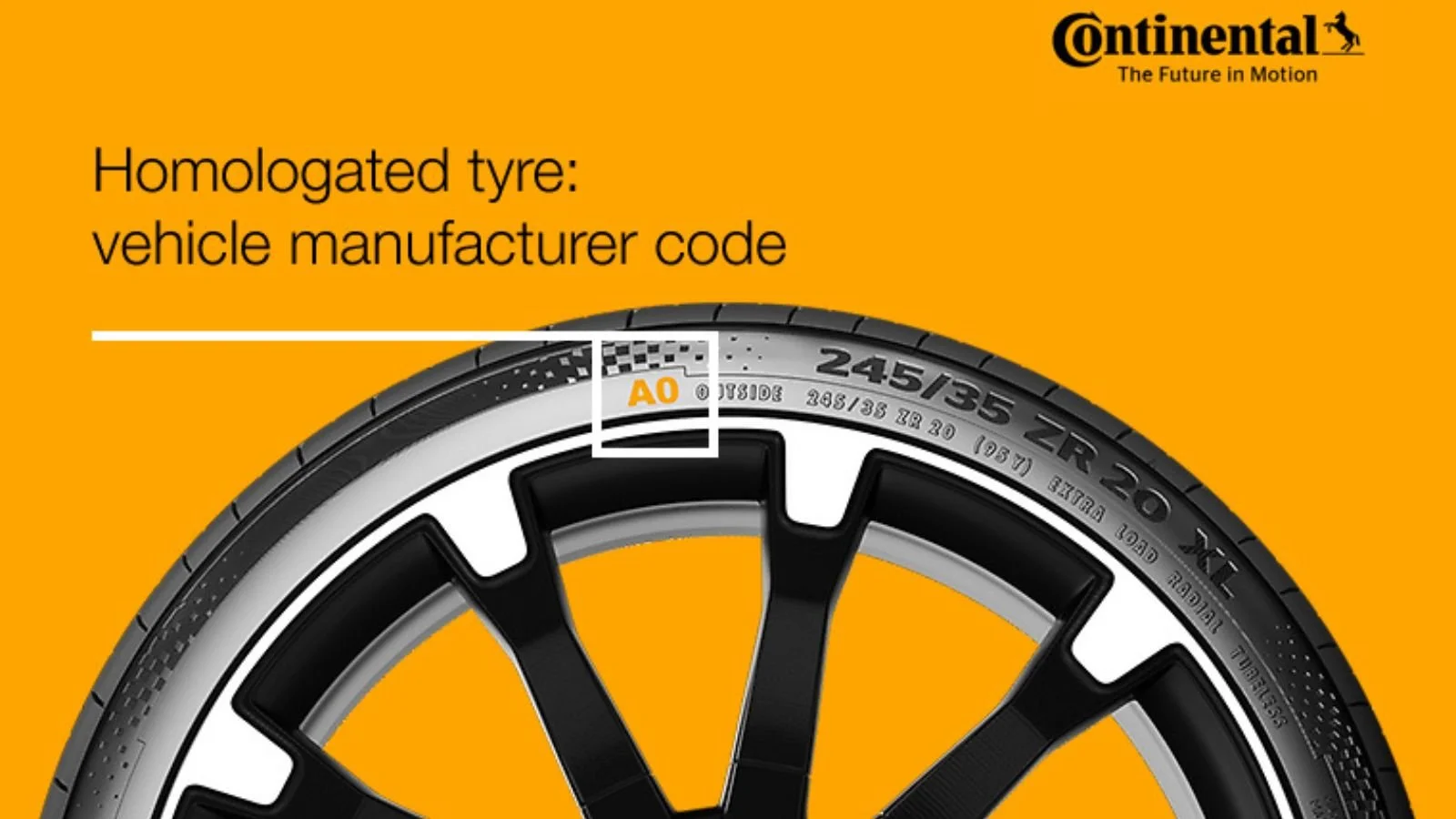
Example of homologation code on a Continental tire.
Tip: For best results, avoid mixing different OE codes on the same axle; ideally run a matched set on all four wheels.
Automaker OE Markings (Homologation Codes)
These marks mean the tire was validated for that brand/model. Keep the table format on mobile—scroll horizontally if needed.
| Automaker | Common Marking(s) | Notes |
|---|---|---|
| Audi | AO, AO1/+, AOE (runflat), RO1/RO2 | “Audi Original.” RO codes often on RS/Quattro programs. |
| BMW / MINI | * (star), *1, *11; I* (for some i/EV) | Star-mark = BMW approval; MINI also uses the star mark. |
| Mercedes-Benz | MO, MO1/MO2, MOE (runflat), MOE-S, MO-S, MO-V | “Mercedes Original.” MOE denotes extended mobility (runflat). |
| Porsche | N0, N1, N2...; model codes NA0–NF2 | N-spec is Porsche’s long-running scheme; higher number ≠ better, just newer or different spec. |
| Tesla | T0, T1, T2, TS0 | Often paired with acoustic foam. Keep pairs/sets matched. |
| Polestar | POL | Polestar-specific tune. |
| Volvo | VOL | Volvo approval on many Pirelli/Michelin/Conti fitments. |
| Jaguar | J, JRS | Jaguar-approved; JRS appears on some performance specs. |
| Land Rover | LR, LR1–LR5 | Land-Rover-specific SUV load/sidewall tuning. |
| Bentley | B, B1, BC, BL | High-load, NVH-tuned specs for heavy grand tourers. |
| Maserati | MGT, MGT1/2 | GranTurismo and other Maserati programs. |
| McLaren | MC, MC1, MC2 | Track-biased casing & compound differences are common. |
| Lamborghini | L, L1 | Super-car fitments; avoid mixing with non-L spec. |
| Ferrari | F, F01–F04 (Pirelli); sometimes K1–K3 | Model-specific handling balance; keep matched sets. |
| Alfa Romeo | AR, ARR | Giulia/Stelvio among common AR specs. |
| Alpina | ALP | Alpina-specific refinements to BMW platforms. |
| Lucid | LM1, LM2 | EV-tuned rolling resistance & NVH. |
| Rivian | RIV | OE on R1T/R1S; pay attention to load index. |
| Pagani | HP | Ultra-low volume hypercar spec. |
Helpful Notes
- OE code ≠ runflat tech. MOE/AOE indicate runflat for MB/Audi; technologies like RFT/SSR/ZP/ROF (runflat) or PNCS/ContiSilent/Michelin Acoustic (foam) are not “homologation codes.”
- Don’t mix codes per axle. Handling/noise can shift; keep the same code across four corners when possible.
- Replacement choice. If your car came with an OE-marked tire (e.g., N-spec Porsche, T-spec Tesla), matching that mark preserves the intended ride/handling.
Need help choosing OE-marked tires? Call/Text (647) 819-0490 or shop tires online. We service driveways, condos, and workplaces across the GTA.
FAQ
Can I use a non-OE tire on an OE-tuned car? Yes, but expect subtle changes in ride/handling/noise. We’ll help you choose an equivalent if the OE spec is unavailable.
Are OE codes the same as runflats? No. OE = automaker approval; runflat/foam are separate technologies.
Should I match codes when replacing only two tires? Ideally, yes—especially on performance cars and EVs.
