
All-Weather vs. All-Season vs. Winter Tires: What’s the Difference?
If you’ve ever wondered what the difference is between all-season, all-weather, and winter tires, you’re not alone. Most drivers assume “all-season” means it’s good for winter—but in Canada, that’s not the case.
Let’s break down what each tire type is made for, what the symbols on the sidewall mean, and which option makes the most sense for Toronto, York Region, and Durham Region drivers.
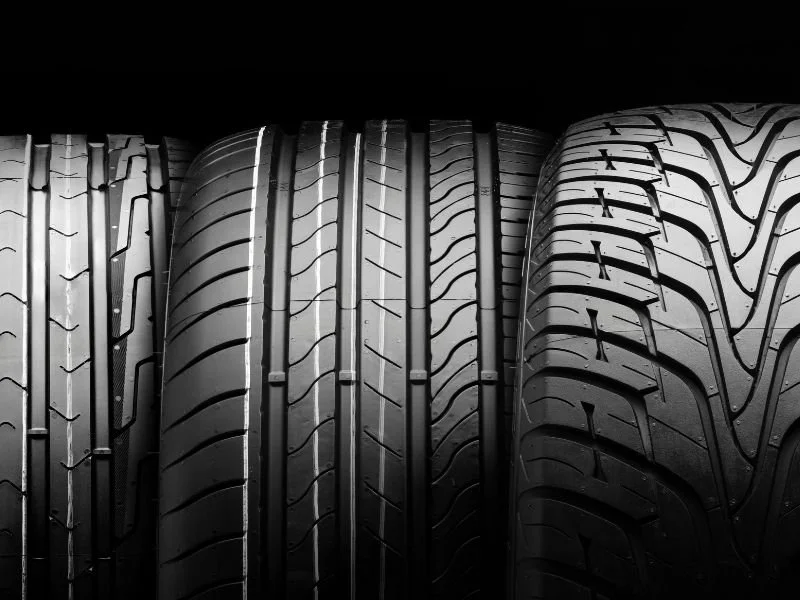
Tires
❄️ Winter Tires
Winter tires are designed specifically for cold weather, snow, slush, and ice. Their rubber compound stays soft and flexible below 7°C, which helps them grip the road when other tires go hard and slick.
They’re the only tires that carry the Three-Peak Mountain Snowflake (3PMSF) symbol—this means they meet specific traction requirements for winter conditions and are legally required in places like Quebec and BC.
Features:
Deep tread blocks and biting edges for traction in snow/slush
Soft rubber compound that stays grippy in freezing temps
Best braking and acceleration on ice
Only tire truly designed for Canadian winters
Downsides:
Wears quickly in warm weather
Feels soft or squishy in dry conditions
Requires a seasonal tire swap
☀️ All-Season Tires
Despite the name, all-season tires are not made for Canadian winters. They’re perfect for spring, summer, and fall—but once the temperature drops, their rubber gets hard and loses traction on ice and snow.
They’re marked with M+S (Mud + Snow) on the sidewall, but that doesn’t mean they’re certified for winter use. M+S is just a design rating—it does not meet snow traction standards.
Features:
Long-lasting and quiet
Good grip in warm/dry/rainy conditions
Excellent fuel economy
Ideal for 3-season driving in Ontario
Downsides:
Unsafe in winter weather
Not legally accepted in areas that require winter tires
Cannot handle black ice, snow-packed roads, or slush
🌦️ All-Weather Tires
All-weather tires are the perfect middle ground: they’re safe to use year-round, even in full-on winter. They carry the 3PMSF winter rating just like dedicated winter tires, but they’re built to also handle warm temperatures without wearing out quickly.
They don’t perform quite as well as full winter tires in deep snow or extreme cold, but they’re more than capable for GTA winters—especially in city driving.
Features:
Year-round legal winter tire (3PMSF certified)
Better winter grip than all-seasons
Doesn’t need to be swapped out seasonally
Perfect for drivers who want one tire solution
Downsides:
Slightly less performance than dedicated tires (both in winter and summer)
May wear faster than a true summer + winter setup
| Tire Type | Winter Rated | Best For | Needs Swapping? |
|---|---|---|---|
| Winter Tires | ✅ 3PMSF | Snow, ice, -20°C and below | Yes |
| All-Season Tires | ❌ Not winter approved | Spring, summer, fall | No |
| All-Weather Tires | ✅ 3PMSF | Year-round driving | No |
✅ Which One Should You Get?
It depends on your driving habits:
Drive up north for skiing? You need full winter tires.
Stick to Toronto city streets year-round? Go with all-weather tires.
Only drive spring to fall? All-seasons will do the job.
💡 Pro Tip: All-Weather Tires Save You Time & Money
If you're tired of swapping tires every season (and paying storage fees), all-weather tires might be the best long-term solution. You’ll still be legal and safe in Ontario winters without the hassle.
🛞 Need Tires or a Seasonal Changeover?
Sparky X Mobile Tire Shop brings the tire shop to your driveway. Whether you want:
All-weather tires installed on your car
A pickup service for your winter wheel set to balance or replace tires
A mobile tire repair or rotation
We’ll get it done quickly, professionally, and for less than most traditional shops.
Serving: Toronto, Scarborough, North York, Markham, Richmond Hill, Pickering, Ajax, Whitby, Oshawa, Bowmanville, Courtice, and more.
Contact us for a quote:
Tel: 647-819-0490
Online: Contact Form
