
Tire Rotation Guidelines
Why Tire Rotation Matters
Regular tire rotation is one of the most important steps in extending tire life, improving handling, and maintaining warranty coverage. Because each wheel position on a vehicle carries a different load and performs unique steering or braking functions, tires wear unevenly over time.
By rotating tires at the proper intervals, you help ensure even tread wear, safer driving, and maximum value from your investment.
Recommended Rotation Interval
Every 8,000 – 10,000 km (5,000 – 6,000 miles), or every oil change.
Always follow your vehicle manufacturer’s recommendations if they differ.
Rotate sooner if you notice uneven wear, vibration, or frequent tire service.
Standard Rotation Patterns
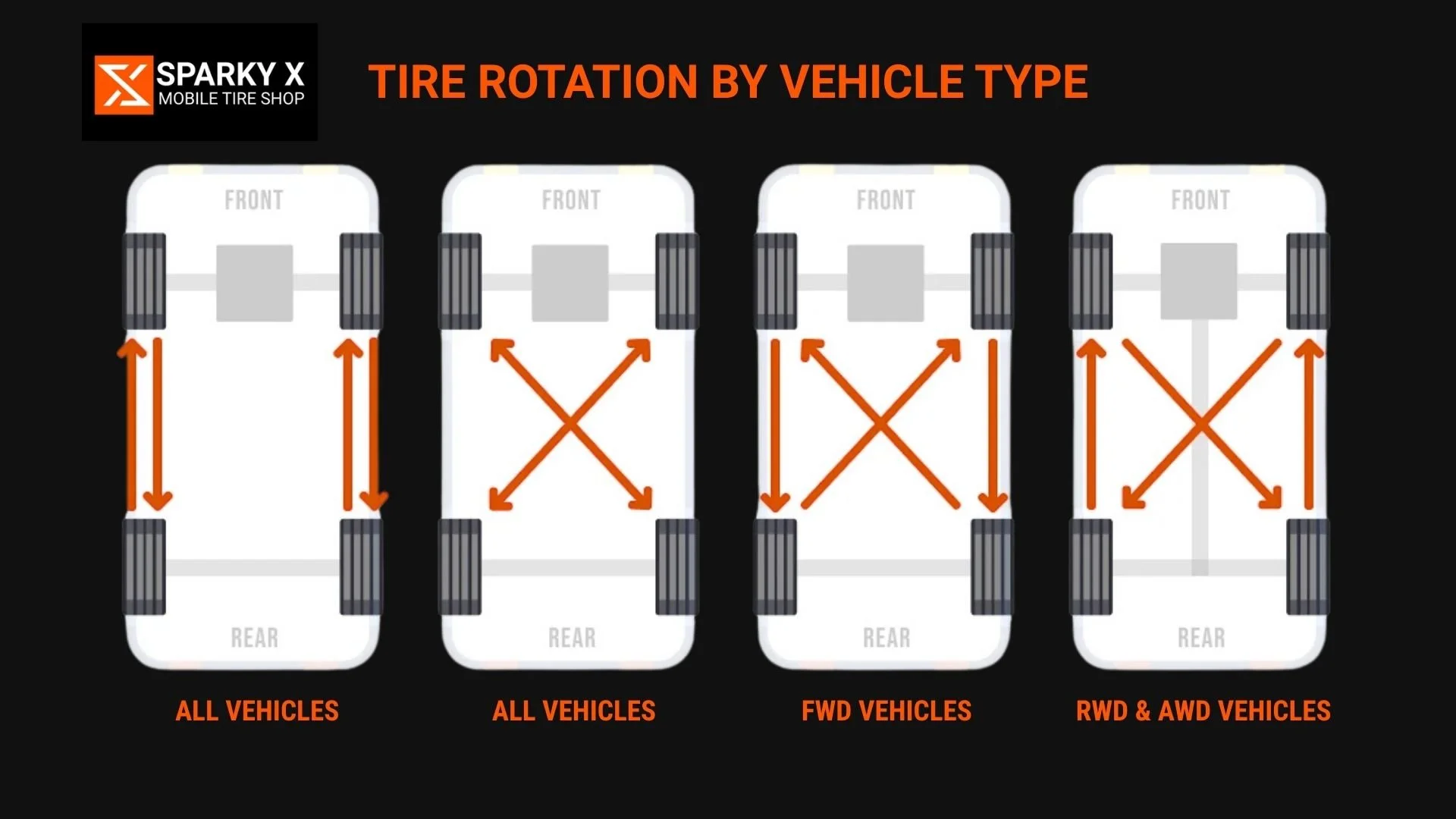
Tire rotation chart by vehicle type.
1. Forward Cross (Primary for Front-Wheel Drive)
How it works:
Front tires move straight back.
Rear tires cross to the opposite front.
Best for: Cars and small SUVs with front-wheel drive.
2. X-Pattern (Alternate for Front-Wheel Drive)
How it works:
All four tires cross diagonally in an “X.”
Best for: Same-size, non-directional tires.
Tip: Useful when a quick full swap is needed.
3. Rearward Cross (Primary for Rear-Wheel & Four-Wheel Drive)
How it works:
Rear tires move straight forward.
Front tires cross to the opposite rear.
Best for: Trucks, SUVs, and performance vehicles with rear or 4-wheel drive.
Special Considerations
Directional Tires: Rotate only front-to-rear (stay on the same side).
Staggered Fitment (different front/rear sizes): Only side-to-side rotation is possible.
Full-Size Spare: If your vehicle has a matching spare, include it in a 5-tire rotation pattern (spare moves into right rear position).
After Tire Repair: Confirm balance and monitor the repaired tire’s wear closely.
Technician’s Note
Sparky X follows TIA-certified methods using torque sticks, military-grade tools, and EV-safe procedures. After every rotation:
Lug nuts/bolts are torqued to spec (RIST process: Remove, Inspect, Snug, Torque).
Customers are advised to retorque after 80–100 km for safety.
Conclusion
Tire rotation is not just maintenance — it’s a safety measure. At Sparky X, we follow TIA-approved procedures to keep your tires wearing evenly, maximize performance, and help protect your investment.
Book Your Tire Rotation with Sparky X Mobile Tire Shop Today!
We come to you!
Tel: (647) 819-0490
